



President-elect Joe Biden hopes to revive the Iran nuclear deal after taking office, but that task is only growing more daunting.
Driving the news: Iran announced today that it would begin to enrich uranium to 20% — within striking distance of weapons-grade levels — at its underground Fordow facility.
- Hours later, Tehran announced it had seized a South Korean-flagged tanker in the Strait of Hormuz, allegedly for pollution. That’s another reminder to the world of Iran’s ability to disrupt a crucial shipping corridor.
- Meanwhile, the U.S. and its regional partners continue to fear possible Iranian reprisals one year after the U.S. attack which killed Iranian Gen. Qasem Soleimani, as well as the more recent assassination of Iranian chief nuclear scientist Mohsen Fakhrizadeh.
The big picture
In Biden’s view, Iran’s nuclear acceleration and the simmering regional tensions are consequences of President Trump’s "maximum pressure" approach following his withdrawal from the 2015 deal. Biden is willing to lift the nuclear sanctions and bring the U.S. back into the deal — if Iran returns to compliance.
- Incoming national security adviser Jake Sullivan told CNN’s Fareed Zakaria on Sunday that after returning to the deal, known as the Joint Comprehensive Plan of Action (JCPOA), Biden will pursue follow-on negotiations to constrain Iran’s regional behavior.
- Iran’s ballistic missile program, Sullivan said, "has to be on the table” in those negotiations.
The framework might appear to be in place, as President Hassan Rouhani says Iran is also prepared to return to compliance if the U.S. lifts its sanctions. But today's enrichment announcement underscores just how thorny the process will be.
- If Iran enriches significant quantities of uranium to 20%, its nuclear breakout time will become “very, very small,” says Ernest Moniz, who played a key role in negotiating the 2015 deal as Barack Obama’s energy secretary. “The key question is how much they make.”
State of play
The move toward 20% enrichment is part of a law — passed over Rouhani’s objections — that also calls for the suspension of UN nuclear inspections if sanctions on Iran’s oil and banking sectors aren’t lifted by February.
- That would be a “game-changer” beyond any of the steps Iran has taken up to now, Moniz says, because “then it becomes more and more difficult to argue that we know that they are not engaging in a weapons program.”
Iran has also demanded compensation for the damage from U.S. sanctions, though Rouhani has shown some flexibility on that point.
- More challenging may be the insistence from Foreign Minister Mohammad Javad Zarif that Iran is unwilling to negotiate on issues beyond its nuclear program — at least not before the U.S. lifts sanctions.
What's next: Iran also has presidential elections looming in June, with a hardline administration expected to replace Rouhani's.
- Returning to the deal after being burned by Trump is an exceedingly contentious proposition.
- "It's probably the kind of thing that’s easier for an outgoing administration to do, since the JCPOA’s not the most popular item in some political circles in Iran," says Rob Malley, a former Middle East adviser to Obama and now president of the International Crisis Group. The direction of travel will ultimately be set by Iran's supreme leader, Malley adds.
Where things stand: If Biden wants a deal with Rouhani, he’ll have just five months to get it.
The opposition
Biden will face fierce opposition to a swift return to the deal from Israel and the Gulf states, as well as Republicans and some Democrats in Congress.
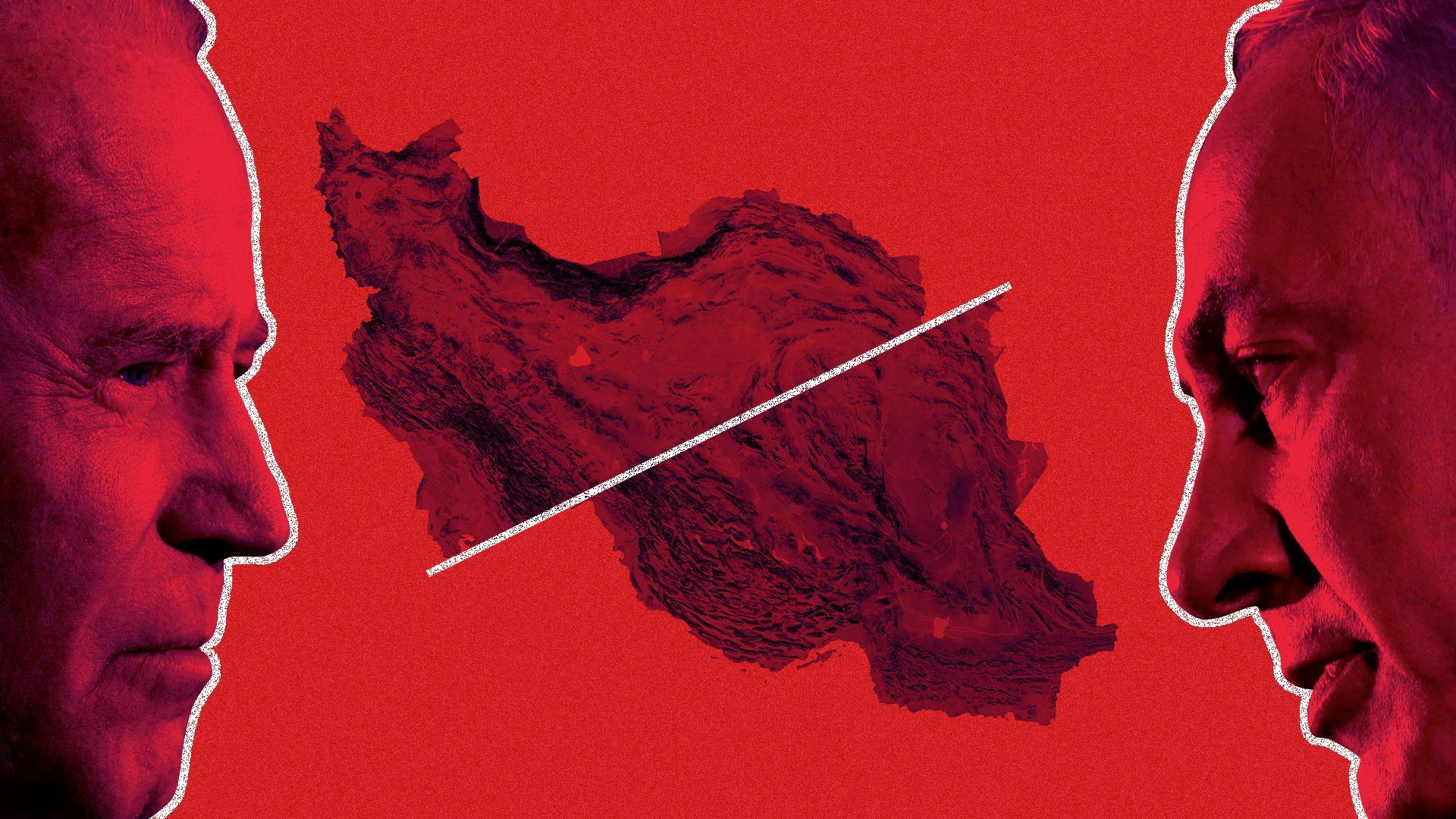
What they're saying: The opponents argue that Biden has been dealt a strong hand by Trump's "maximum pressure" campaign and he should play it carefully.
“It’s really an economic war that the U.S. is waging against Iran," says Gérard Araud, a former French ambassador to the U.S. (2014–2019) and permanent representative to the UN Security Council (2009–2014). "It's true that that gives the U.S. leverage."
- There have already been a smattering of public comments from Israeli and Gulf officials discouraging Biden from returning to the 2015 deal and only then attempting to negotiate a deal addressing regional concerns.
- Sullivan's argument is that the U.S. will be better positioned to negotiate those issues once Iran's nuclear program is "back in a box."
One of the most contentious points will likely be sequencing.
- Iran says it will return to compliance once the U.S. lifts sanctions, while Biden says he'll lift sanctions once Iran returns to compliance.
- That will require Iran to take a number of technical steps, including shipping enriched uranium out of the country, likely to Russia.
- The process could be completed in about four months, Moniz says — likely faster if Iran goes "all out," but slower in a staged process in which Iranian steps are paired with U.S. sanctions relief.
The other side: The Trump administration has attempted to block Biden's path back to the JCPOA, in part by piling sanctions on Iran for non-nuclear issues.
- Biden could lift those sanctions without congressional approval — and the Iranians might demand that he do so — but Iran hawks hope the issue will become another domestic political minefield.
What to watch
Iran's recent nuclear acceleration,and its threat to expel inspectors, will likely be Biden's primary concerns in the near term — and these acts are clearly intended to force him to move quickly.

Yes, but: “Some steps that Iran could take could backfire," Malley adds. "I think there comes a point at which more pressure might mean that the Biden administration will change course as well."
Flashback: Three European signatories to the JCPOA — France, Germany and the U.K. — worked desperately over the two years following Trump's withdrawal to preserve the deal until the next U.S. election.
- Now, the candidate who made salvaging the Iran deal a top priority is two weeks away from the Oval Office.
- But even he acknowledges that the path forward is uncertain. Tony Blinken, Biden's pick for secretary of state, has said the U.S. will work in partnership with Europe on Iran — whether or not Iran ultimately agrees to return to compliance.
What's next: European leaders and diplomats will attempt to facilitate dialogue between the U.S. and Iran, Araud says, but he doesn't expect Europe to play "a central role."
- He recalls years of European attempts to negotiate with Iran before the Obama administration took the issue on.
The bottom line: “We knew from the beginning that the real issue was between the United States and Iran," he says, "and that’s even more the case now."