The following is a short list:
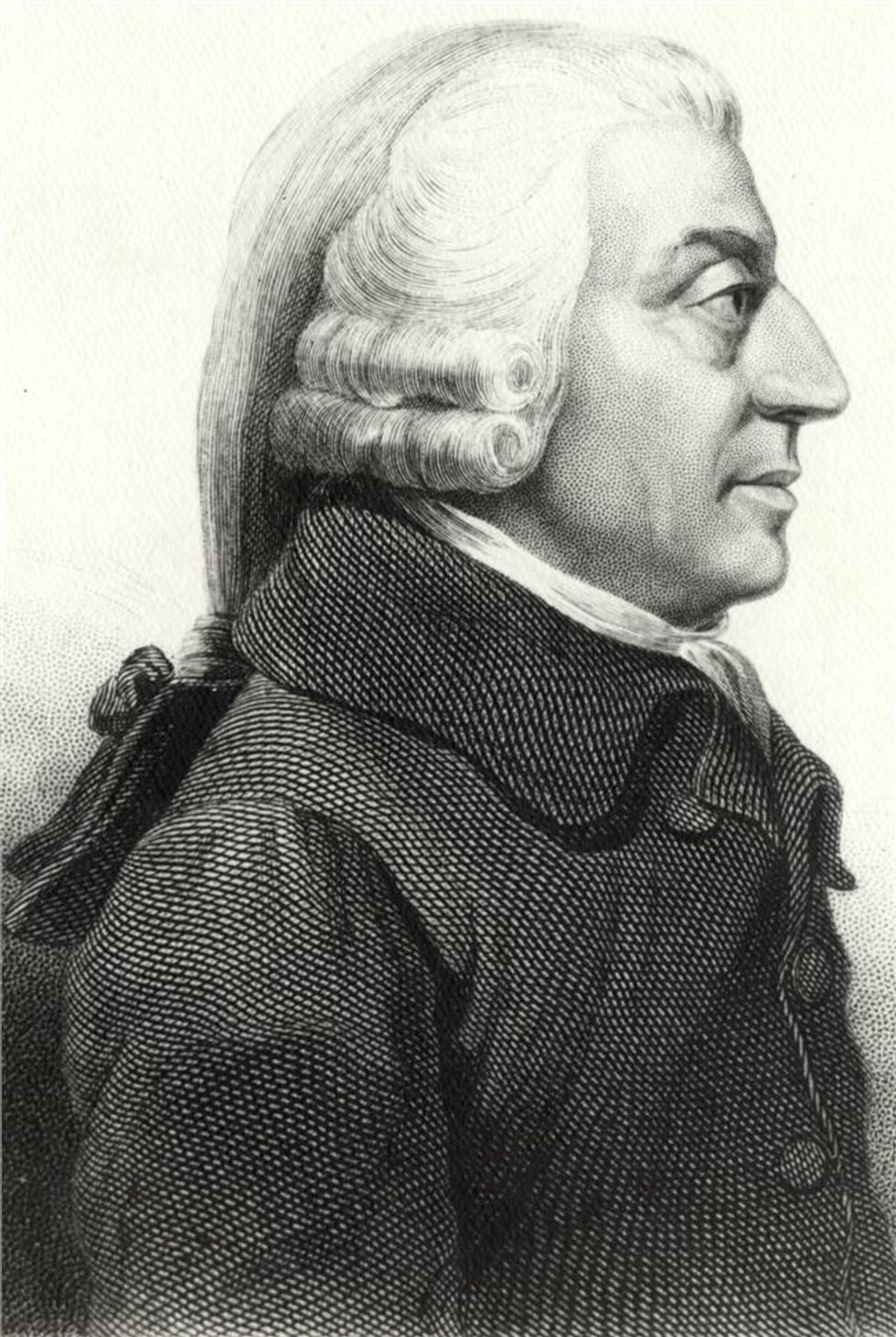
Adam Smith 1723–1790
You may recognise Adam Smith, he's the chap on the back of your £20 note.


The end!
The following is a short list:
You may recognise Adam Smith, he's the chap on the back of your £20 note.


The end!
With crime surging around the country, the Biden administration is telling local officials how to use some of the $1.9 trillion in COVID relief funds to bolster their police departments.
Driving the news: That guidance is spelled out in a White House memo obtained by Axios ahead of President Biden's meeting today with law enforcement and elected officials from around the country — including Eric Adams, New York City's Democratic mayoral nominee and former police captain, who's openly critical of his own party.
The big picture: Democrats are concerned that violence and lawlessness could affect Biden's presidency and their political fortunes in the midterm elections.
The intrigue: Adams has railed against fellow Democrats for focusing on national gun control legislation instead of directly addressing crime in blighted neighborhoods, calling those priorities “misplaced.”
Details: The memo's subject line leaves little mystery about how the White House is seeking to position itself: “How Local and State Government Can — and Should — Use the President’s Gun Crime Reduction Strategy and Historic Rescue Plan Funding to Improve Public Safety.”
Flashback: In June, when Biden first explained that states and localities could use some of the $350 billion in local COVID money for law enforcement, he also touted traditional Democratic efforts on gun control and announced a new plan to crack down on gun dealers.
The bottom line: Monday’s event is another attempt by the White House to show that it is aware of a national crime problem and that Biden is considering all his policy options to address it.
An analysis of more than 5 million loans given out through the Paycheck Protection Program has found stark inequalities for Latino, Black and Asian people in how the critical funds were doled out.
The big picture: Neighborhoods with high Latino populations in places like Los Angeles, New York, Phoenix and San Diego got half as many loans than white non-Hispanic zones, according to reporting from Reveal News and The Los Angeles Times.
Why it matters: Thousands of minority-owned businesses shuttered during 2020, a fate that PPP loans for rent, utilities or payroll were meant to prevent.
What’s next: Changes made to the second round of PPP loans seek to improve access for business owners of color through smaller lenders that serve more of the communities. And non-citizens with Individual Taxpayer Identification Numbers can now get federal pandemic relief. Applications are due before May 30.
A poll and series of focus groupshas honed a one-two punch for a doable immigration deal: Give Democratic lawmakers a real path to citizenship for Dreamers, and give Republicans tight border security that's more realistic than a wall.
Why it matters: The formula — by Frank Luntz, who rose to fame as a Republican pollster but in recent years has taken a more bipartisan approach to policy — would make real progress on one of the nation's biggest tragedies that Capitol Hill has failed to confront.
In an exclusive preview of his findings, Luntz told me: "Republicans are more pro-immigrant than elites realize, and Democrats are more pro-border-security than elites realize."
Luntz drew on 20 focus groups to pose this climactic proposal in a poll of 1,000 registered voters that he concluded Friday:
The result (margin of error: ± 3 points): 60% support.
Luntz over the years has recommended phrasing for Republicans that includes "death tax" instead of "estate tax," and "government takeover of healthcare" for "Obamacare."
The proposal fits the No. 1 recommendation former President George W. Bush made in a Washington Post op-ed in conjunction with his new book of paintings of immigrants, "Out of Many, One":
Between the lines: The Luntz compromise leaves massive problems unaddressed. It does nothing to help most of those now living in the U.S. shadows, and wouldn't remedy the current border emergency. But it would be the first real movement on immigration legislation in decades.